TMS Therapy for
Treatment-Resistant Depression
TMS therapy is proving to be an effective treatment for depression and is increasingly recognised as an option for treatment-resistant cases.
You may have tried several antidepressants, months of therapy, or both – yet the heaviness remains, and the path forward feels uncertain.
“When depression doesn’t respond to medication, it’s not the end of the road – it might be the beginning of something new.”
At my psychiatric practice in Somerset West, I offer Transcranial Magnetic Stimulation (TMS) therapy for depression, and I’ve seen how this evidence-based treatment can help people move forward when it feels like nothing else is working.
When treatments for depression don’t work?
Many people wonder when to consider TMS therapy after traditional treatments have failed. In this article, we share Sarah’s* journey to illustrate what that decision can look like.
“If your medication isn’t helping and the side effects are too much, it may be time to explore a new path.”
Sarah had lived with recurring major depressive episodes for years. She had already completed two full trials of antidepressants – each at an appropriate dose and duration – but her symptoms persisted. Sleep was elusive, her focus had disappeared, and work absences were increasing. Side effects like weight gain, emotional blunting, and mental fog only made things worse.
What is treatment-resistant depression?
Treatment-resistant depression (TRD) refers to depression that doesn’t improve after trying at least two different antidepressants, taken at appropriate doses for a sufficient period of time. It’s more common than many people realise – and it doesn’t mean that you’re out of options.
TMS therapy is one of those options and offers an alternative to antidepressants for some patients. It’s a non-invasive treatment for depression that doesn’t rely on daily medication. Instead, it uses gentle magnetic pulses to stimulate areas of the brain involved in mood regulation.
Is TMS Therapy for Treatment-Resistant Depression safe and effective?
TMS therapy has shown a strong safety profile in clinical practice and research.
For those wondering, is TMS safe and effective?, it is approved by the FDA and SAHPRA, and it is offered at my practice in Somerset West as a carefully considered option for suitable patients. TMS therapy is available at the Somerset West practice of Dr Kobus van der Walt.
If you’re curious about how TMS therapy works and whether it may be right for you, find out more on the TMS Therapy page.
What to expect from an initial TMS therapy assessment
When Sarah arrived at my practice, we didn’t start with procedures or tests. We started with a conversation. I took the time to understand her treatment history, what had worked, what hadn’t, and how depression was affecting her life. Only after a full clinical assessment did we move forward with a short physical exam to ensure that TMS therapy was safe and suitable for her.
You can read more about common questions on the TMS FAQs.
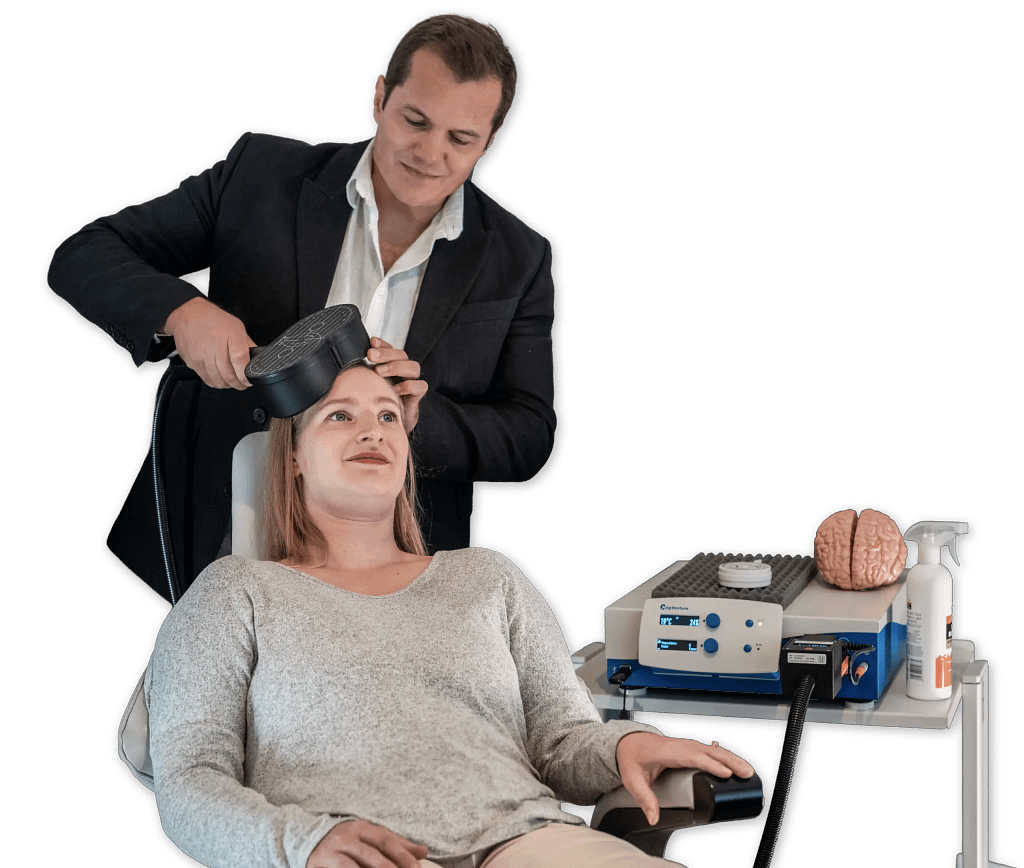
If you’re considering TMS therapy for treatment-resistant depression, the first step is a personalised assessment. You’re welcome to get in touch — no referral needed.
How TMS therapy can reduce long-term healthcare costs
Sarah was understandably concerned about the cost. After years of medical co-payments, pharmacy bills, and specialist appointments, she wondered whether another treatment would be worth the investment.
TMS treatment for depression typically involves a series of daily sessions over 4 to 6 weeks. While there is an upfront cost, the potential benefits – fewer medications, fewer missed workdays, and reduced long-term healthcare expenses – often outweigh that initial spend. For many, it’s not just a medical decision. It’s a choice to invest in quality of life.
“TMS helped me get back to work, reconnect with my family, and feel like myself again.”
TMS therapy maintenance and long-term planning
After completing her course of TMS sessions, Sarah noticed a clear improvement.
Her energy had returned, her mood was more stable, and she felt optimistic again. To help protect those gains, we discussed a maintenance plan. For many patients, occasional follow-up sessions – also called booster sessions – can support long-term stability and reduce the likelihood of relapse.
An added benefit was that Sarah could gradually reduce her medication use. With fewer side effects and improved clarity, she felt more in control of her own recovery.
TMS Therapy in the line-up of Antidepressant Alternatives
There’s a concept in psychiatry known as the “virgin brain.” It suggests that people who haven’t previously tried neuromodulation therapies like TMS may respond especially well to them.
While this idea is still being explored, it highlights something important – TMS treatment for depression doesn’t have to be the last option on the list.
For some people, it can be considered earlier in the treatment process – particularly when medication side effects are severe or when rapid improvement is needed.
Start the conversation about TMS therapy today
If parts of Sarah’s story sound familiar, you’re not alone. Many people find themselves wondering what else they can try when medication hasn’t brought the results they hoped for.
At Dr Kobus van der Walt’s practice, we offer TMS therapy for treatment-resistant depression to individuals from Somerset West, Stellenbosch and across the Western Cape. Every case is assessed individually.
You don’t need a referral to begin – self-referrals are welcome, and I will personally review each enquiry.
“Choosing a new path doesn’t mean you’ve failed – it means you’re ready to move forward.”
*Sarah’s name has been changed to protect privacy. This story is based on a real patient experience, shared with consent and anonymised to maintain confidentiality.
- Dr Kobus van der Walt
- TMS Therapy
TMS therapy may help when standard treatments haven’t worked — including in complex psychiatric or neurological cases.
Referrals from clinicians are accepted, and self-referrals are welcome.
Contact Dr Kobus van der Walt

TMS Therapy in Somerset West, Stellenbosch & the Western Cape
Ready to take the first step to better mental health?
If you’ve been living with depression that hasn’t improved despite treatment, TMS therapy could offer a new way forward.
Book a TMS treatment for depression with Dr Kobus van der Walt today.
An integrated, ethical approach to interventional care
TMS is offered as part of a broader, person-centred psychiatric practice that prioritises individual needs, safety, and clinical integrity.
Visit the Services page to learn more about additional options available through my practice.